Saturday, June 13, 2015

The True Intent of Westward Expansion Polices


This week in class, we continued with our independent student learning, on the topic of buffalo soldiers and native Americans. The buffalo soldiers were African American troops that were created because the government felt that there was a need for more of an army presence in the Midwest. These soldiers mapped out territory, repaired forts, and had a steady job with food and respect- to an extent. These factors made many African Americans move to the great plains for the job, because it was not the type of opportunity that they commonly got in other places. While the term “buffalo soldiers” was not their official name, this is what they were called by native Americans because they fought many of these tribes.  In addition to the buffalo troops, the government created many policies with the goal of more westward expansion. One of these was the allotment program, which divided up the native Americans land, so each individual would own some part of the land, as opposed to a whole tribe owning a large amount. This may have seemed like a good idea, but it was not the way that the native American culture worked, and even more, 90% of the land was given to the public, not back to the native Americans. The essential question that we created for this unit was  “Did the government have good intentions when enacting policies for westward expansion? In what ways did these policies impact the natives and buffalo soldiers?” Using informative videos as well as pictures and documents, I was able to come to a conclusion.
buffalo soldiers riding through the desert 


On the surface, the concepts behind westward expansion and buffalo soldiers seem like a great idea, especially for expanding the land and power of the united states. But, if you looked deeper than the policies and titles, it is clear that this was in fact a violent and inhumane way to expand the united states. The intentions may have been innocent and good, but the way that they were carried out left a trail of destruction, violence, and countless losing their families, homes, and lives as they knew it. Of course, the intention of this expansion westward was not violence and war, but when you take tribe's land and all that they stand for, a fight against it is inevitable. in the 1860s, gold was discovered in this region, which caused the number of immigrants to increase drastically. This made the simple lives of the native Americans even more complicated and the violence towards them to leave their homes even worse. In 1868, the Second Treaty of Fort Laramie was signed, which promised the native Americans possession of the Dakota region if they stopped fighting. Many people agree to this, and move to the reservation led by Red Cloud. Others, including leaders Crazy Horse and Sitting Bull, refuse to leave.In 1876, the U.S government orders all native Americans to go to designated reservations, but the native Americans ignore this order. This leads to the Battle of Little Bighorn. After all of this violence, the U.S government enacted the Dawes Act, which stated, “To each head of a family, one-quarter of a section; To each single person over eighteen years of age, one-eighth of a section; To each orphan child under eighteen years of age, one-eighth of a section;” While this act had good intentions, to make sure that the native Americans did not lose any more of their land, it disregarded the way in which the native American tribes lived. Unlike a normal American, they lived together and shared their land, something that the Dawes act took away from them.
I personally believe that at its core, the policies that the U.S government created for westward expansion were made from good intentions. But, I think that their disregard for the native Americans and their culture and land caused an unnecessary and horrible amount of violence towards these people. The buffalo soldiers, a minority themselves, were placed in this position because of the circumstances. The job that they had was not one that was appealing to a white man, and therefor it was put on them to do the work that the white man don't want to do. In the end, these policies for westward expansion caused a great amount of suffering to the native Americans, and regardless of the U.S governments intentions, the outcome and execution of these policies was something inhumane.


Sources:
Quote: http://www.edline.net/files/_FFJNJ_/72e885a0a31113a13745a49013852ec4/Excerpts_from_Dawes_Act.pdf
Image: http://www.discoverseaz.com/History/BufSold.html

Friday, June 5, 2015

Carnegie and Rockefeller: Feeding or Robbing the People?

After our long Civil War unit came to a close, we only had a few weeks left of school, so in order to get the most information in, we changed the way our class was run a little. Each week, we begin a new topic, and as students create an essential question, and 40 multiple choice questions pertaining to the topic that will go on our final exam. This week, we looked at Andrew Carnegie and John D Rockefeller, the two biggest business man in the late 19th century. During this time period, these big business man were referred to as “robber barons” or “captains of industry” by the people, depending on if they liked them or not. A captain of industry was a leader, and they fought each other for full control of their business, also known as having a monopoly. A robber baron was essentially a captain of industry that someone may not like, they were seen as corrupt and cruel, and destroyed their business rivals and treated workers poorly. The essential question for this lesson was “Should Andrew Carnegie and John D Rockefeller be classified as robber barons or captains of industry?”
I believe that regardless, these men are captains of industry, since they were leaders during this time period. The question of whether or not they are also robber barons is one that has a less clear answer. Both Carnegie and Rockefeller were outstanding philanthropists, giving back to society in many ways. Andrew Carnegie donated millions to education, built libraries, and founded Carnegie Mellon University. John D. Rockefeller donated over 500 million dollars to education, science and medicine. Both men held the ideology that there were made rich by God, and because of this had the obligation to give back to the less fortunate. Carnegie said “I believe the power to make money is a gift of God ... to be developed and used to the best of our ability for the good of mankind. Having been endowed with the gift I possess, I believe it is my duty to make money and still more money and to use the money I make for the good of my fellow man according to the dictates of my conscience.” While these acts of charity would make these men seem like only captains of industry, and not robber barons, this is not all that they did. Both of their reputations were ruined by their greed and disregard to others. Rockefeller bribed politicians and did what he could to buy out or put his competition out of business, two prominent characteristics of a robber baron. Andrew Carnegie's reputation was ruined by the Homestead Lockouts, one of the largest labor disputes in American history. Many people were very angered by this, an article said “Ten thousand "Carnegie Public Libraries" would not compensate the country for the direct and indirect evils resulting from the Homestead lockout." In my opinion, it is clear that regardless of their roles as philanthropists and however much they gave back, their actions and morals still categorized them as robber barons. Their primary goal was gaining wealth, and they were not inspired by the needs of others, but only by their personal greed.
When I first thought about the essential question, my immediate answer was that these men were not at all robber barons. I was blinded by their incredible donations to society, and I hadn't realized that while this is an unbelievable amount to donate in any ones eyes, when you are as wealthy as these men were, it wouldn't effect them very much. I noticed how greedy their actions were, and how much disregard they had for others on their way to the top. I was shocked to realize how someone who gives so much can actually be so cruel. We looked at an image that I thought represented one person doing such opposite things.

This image shows Carnegie in a “double role”. On one side, he is cutting workers pay, and on the other, giving back to people. This makes me believe that his charity work was not at all out of his goodness, but solely so that he would appear good to those around him, when he in fact was cutting workers pay just the same. I can conclude from this lesson that these men purposefully made themselves out to look like selfless philanthropists, but this was all an act to cover up their robber baron ways.


Sources

Quote 1: John D. Rockefeller in an interview with William Hoster, quoted in God's Gold (1932) by John T. Flynn
Quote 2: Editorial in the St. Louis Post-Dispatch, early August, 1892.
 Image 1: "Forty-Millionaire Carnegie in his Great Double Role," The Saturday Globe, 9 July 1892; from David P. Demares


Friday, May 1, 2015

Freedom For the People, From the People

In this activity, we looked at the ways in which slaves were granted freedom, and the steps that were taken to get to this result. The essential questions for this lesson were: "Who "gave" freedom to enslaved Americans? Did freedom come from above or below? To what extent were Abraham Lincoln's actions influenced by the actions of enslaved Americans? To find out the answers to these questions, we looked at four letters/speeches from Abraham Lincoln to look at his professional and personal opinion on slavery at different times during the war.


But first, we looked at this picture of Lincoln, who seemed to be personally giving slaves their freedom, as the slaves were kneeling next to him thanking. From this picture, it appears as though the slaves freedom came completely from “above”, as Lincoln is the one giving it. But, once we looked more closely at documents describing slaves actions during the war, it is clear to see that the freedom in fact began from “below”. If the slaves had not forced the issue of slavery upon those above them, than those above them, i.e President Lincoln, would not have put so much of an emphasis on the topic. To answer the essential question, while the freedom was “given” by those above them, the actions to make this freedom possible were directly influenced and an effect of the enslaved americans. It is surprising and strange to learn that those who receive the freedom are also the ones who are giving it. This is not technically true, and on paper it is obvious that Abraham Lincoln, with his Emancipation Proclamation and other documents and speeches supporting slavery, is the one who gave the slaves freedom. But the only reason that the had done this was because the slaves made themselves so much of a problem he was forced to deal with it.

The first document that we looked at was an excerpt from President Lincolns reply to an Open Letter from Horace Greeley, in which he states that his "paramount object in this struggle is to save the Union and is not either to save or to destroy slavery." (1)The letter makes it very clear that the primary intention of the war is not at all to abolish slavery, but just to keep to union together. He goes on to say that if this can only be done with abolishing slavery, he will, and if can be done without abolishing slavery, then he will not abolish it. As time goes on, his speeches and letters begin to show a different story from that of this first letter. In the second document, the Emancipation Proclamation, President Lincoln officially grants freedom to all slaves. He still does not recognize that the war is about slavery, stating that the emancipation is "a fit and necessary war measure for suppressing said rebellion"(2) - meaning that the slaves were granted their freedom because of a rebellion they created, and therefore were the reason that they were given this freedom. In the last document we looked at, President Lincolns Second Inaugural Address, in 1865, the truth that the war was about slavery is finally said. Not only that, but Lincoln says that the war was a caused by the slaves persistent fight for their freedom. "These slaves constituted a peculiar and powerful interest. All knew that this interest was somehow the cause of the war." (3)

The people who the issue directly affects will always be the people who work the hardest to resolve the issue, in whatever protest they may be fighting for. The slaves "made a nuisance of themselves" and did what they could to get the attention of those in power, and those that could official abolish what they were fighting against, slavery. In todays world, it is extremely easy from people to fight for issues that they believe in with all of the technology and connectivity that is available. Hashtags have been created for countless causes, and spread throughout the world through twitter. Feminism beliefs have been shared by the message #heforshe, with many celebrity feminists supporting and spreading awareness of the cause. Racism and police brutality towards blacks has been expressed and fought against by #blacklivesmatter. Because many individuals whom are personally affected by these issues shedding light upon them, more people are able to see and possibly do something about it. The outrage of so many about the current police brutality and riots has made those from above, who have power, to be forced to do something about it. The civil war was over 150 years ago, and we are still facing a modification of its cause today. It may look different, but the objective is the same, racial equality in the united states. And although it may look different, the question of who is giving the freedom can be answered in the same way. Regardless of who signs the documents and writes the laws for this racial equality to happen, the reason that it will happen is because of the many individuals from "below"- not in power or government, that forced those from "above" to make the change. 


Citations:
Image of Lincoln: http://www.springfieldmuseums.org/the_museums/fine_arts/collection/view/288-freedom_to_the_slaves_proclaimed_january_1st_1863_by_abraham_lincoln_president_of_the_united_states_proclaim_liberty_throughout_all_the_land_unto_all_the_inhabitants_thereof

Quotation 1- Excerpt from President Abraham Lincoln’s Reply to an Open Letter from Horace Greeley, New York Tribune, 1862 http://www.edline.net/files/_DMF17_/2a87c9edb0c248bf3745a49013852ec4/Freedom_from_Above_or_Below_Documents.pdf

Quotation 2- The Emancipation Proclamation, January 1, 1863 (Excerpts) http://www.edline.net/files/_DMF17_/2a87c9edb0c248bf3745a49013852ec4/Freedom_from_Above_or_Below_Documents.pdf

Quotation 3- President Lincoln’s Second Inaugural Address, March 4, 1865 (Excerpts) http://www.edline.net/files/_DMF17_/2a87c9edb0c248bf3745a49013852ec4/Freedom_from_Above_or_Below_Documents.pdf

Sunday, April 26, 2015

Hunting for Civil War Battles

To learn about the various battles of the civil war, each student chose a battle to individually research. A photo of the battle, and information such as the location, theater, victor and reason for the outcome was all put into a google doc. We then created a shareable link for the document, and put it into a QR code and a bit.ly, and put that and our battle name onto a poster that was hung somewhere in the school for others to find on the “scavenger hunt” Each battle also gave directions to get to the next battle, which was somewhere else in the school. After we had all walked the school in search of the battles, and taken notes on each, we came back to class to discuss our findings. We did this using the website padlet, where everyone could submit their answers for the entire class to see. Each person submitted their answers to the essential question, and it was helpful to see everyones response and helped me personally to understand it more.


qr code.png
The QR code to my battle, The Battle of Bull Run!


The first essential question was “Who was the ultimate victor in each of the theaters of war: East, West, Naval?” This question was clear for us to answer after seeing all of the battles, their victors and their theaters. The ultimate victor for the eastern theater was the confederacy. The confederacy won the Second Battle of Bull Run, the Battle of Fredericksburg, the Battle of Chancellorsville, as well as the Battle of Good Harbor. The ultimate victor for the western theater was the union. The union won the Battle of Fort Henry, the Battle of Fort Donelson, the Battle of Shiloh, the Battle of Vicksburg, and the Battle of Chattanooga. The union was also the ultimate victor for the Naval theater. A commonality of the reason for the outcome of the battles is the losing side was outnumbered. For example, in the Battle of Fort Henry, the Union was the victor because they outnumbered the confederacy, and the confederacy was poorly armed and had outdated weapons.  In some instances a surrender is because of a great number of casualties. For example, in the Second Battle of Bull Run, the union had 5,500 more casualties than the union, and therefore retreated.  


My classes padlet, discussing the ultimate victor in all three of the theaters
http://padlet.com/KerryHawk02/2015ATheaters


I enjoyed doing this activity and thought that it was a unique way to gather information on the battles.I thought that it was interesting to walk around the school to discover the information, and find out battle by battle how the war was going. I enjoyed walking around the school to learn about this lesson, and it made it easier and less difficult to learn about, rather than sitting in a classroom taking tedious notes. Each battle had clear information about it and a picture, making it easier to understand, opposed to searching for and through information on each of these battles individually. Overall, I really enjoyed this activity and found it a great way to learn without sitting in a chair looking at a screen for an hour.

Monday, April 6, 2015

The Civil War Art: People, Places, and Battles


Art was an important aspect of the civil war. It allowed people to express and represent their views as well as the events of the civil war in a platform that all could see. It also allowed people who may otherwise not be able to understand what was happening during battles to have a clear visual of these scenes. We looked online on the website civilwarinart.com to see some of these images, as well as their importance to the civil war. Through these pictures, it is easier to see the events that led up to the civil war and how and why they occurred in this way. 


The fugitive slave act of 1850 further divided the north and the south by forcing northerners to enforce laws that they did not support. The act stated that anyone who saw a  fugitive slave, who had escaped to a free state for however long, was required by law to turn them in. Most northern whites were in favor of the abolition of slavery, and even helped slaves to escape. This new law meant that not only could they not help slaves to escape, but they could not let slaves that they were aware of continue to live in the free state. Even if someone was not a slave, if just one person claimed that they were, then they would be put into slavery. To even further take away the freedoms of slaves, they were not allowed to go to court. 


John Brown was one of the most famous abolitionists of all time. His methods to end slavery were very violent, extreme and controversial- even to other abolitionists. In Harpers Ferry, Virginia, he raided a weapons storehouse called the Federal Armory with the plan to use these weapons with the help of slaves to bring them to freedom. The plan was quickly quickly stopped when he was captured and eventually tried for treason. This event, as well as others that John Brown planned caused an even stronger divide between the north and the south. The southerners saw these violent and extremist actions of an abolitionist and began to view all abolitionists- and the north- in this way. They used John Brown as a reason that the south should secede from the union.   


This image is a poster that tells the outcome of the Dred Scott vs. Sandford case. Dred Scott wanted to sue the United States because he said that he should be free, since he and his wife lived with their owner in a state where slavery is outlawed. The supreme court denied him his freedom, and even more so stated that regardless of if former slaves now lived in slave states or not, they could never become full citizens. This also meant they they were not allowed to sue in federal court. This decision infuriated abolitionists and further divided the north and the south.
 
 
This newspaper cover has the faces of the southern congressmen who resigned their seats after president Abraham Lincoln was elected. They felt that in order to ensure the continuation of slavery in their states, seceding from the union was necessary. The first to secede was North Carolina, and all of the other southern states followed. The president of the newly formed confederacy was Jefferson Davis. 

This map of the united states shows how all of the states were just before the civil war began. Red states were the first to secede from the union, before Lincoln was elected, green are states that seceded after Lincoln was elected, yellow is slave states that did not secede, and blue states are free states. 


In April 1861, confederate troops attacked Fort Sumter. Artist Frederick Edwin Church painted this American Flag as the sunset as a patriotic response to the attack. A meaning behind this painting was that the American Flag was in the heavens, as if the union was guided by a higher purpose. 

The civil war began on April 12th, 1861, when troops from South Carolina fired on Fort Sumter. This bombardment continued for two days, until Major Robert Anderson surrendered, and the federal troops boarded confederate troops as prisoners. President Lincoln responded to this by calling for 75,000 soldiers in order to put down this "rebellion" Fort Sumter then fell, and a New York printing for called Curier and Ives made this colorful lithograph to pay tribute to this event. The prints were cheap, and therefore very popular, as people were very intrigued and interested to see what was happening in the battlefield. 
This image is an engraving of the confederate attack on the unions Fort Sumter. The attack lasted for 33 hours. President Lincoln had previously reinforced the fort with supplies which Confederate General P.G.T. Beauregard believed was an act of war, so he open fired. This image was in the Frank Leslie’s Magazine, a magazine that hired artists around the country create drawings of the civil war, and send them to the magazine. The staff chose the best pictures and copied them by engraving for printing. This method allowed many people to see images and a new perspective on the war and battle zones. 


Monday, March 23, 2015

The Civil War Through Graphs

To better understand the statistics and advantages that the north and south had leaving up to the civil war, I created an infogram displaying this  information. This visual representation helped to see the information more clearly and compare the north and south more easily. For the population and resources of the north and the south, I chose to show the graphs with their percentages side by side. This way, it was clear to see how they related to each other. For each sides motivations, strategies and advantages, I made a slide explaining them. I really enjoyed putting the information from this lesson in this infogram, and I think that it helped enhance my understanding of the topic. By putting the information into a visual and creative presentation, it helped me make connections and see how each aspect affected the others.


Wednesday, March 11, 2015

The Elephant of America: Slavery in the 19th Century

Slavery in the United States was a large problem for many. In the North, abolitionists were strongly against slavery, and more importantly, the spread of it. Pro slavery advocates in the south felt strongly about slavery as well, and the spread of it. To look at the sharp divide of views on slavery in America, and how these views affected each other, we made a timeline of the events pertaining to slavery that led up to the civil war.We split the timeline up based on if something was a proslavery event or anti slavery. In looking at these events, we found the answer to the essential question for this lesson, "How do we know the debate over slavery was the "elephant in the room" for American politics in the early 19th century?" Meaning, how do the events that took place show what a big and controversial issue slavery was in America politics, and how it was being ignored. The timeline and explanation for each event that my group created is below.


The first event that we looked at was the Compromise of 1850. To understand the issues discussed in this compromise, it is necessary to understand what happened 30 years before. Maine wanted to become a free state, but this would make the ratio of slave and free states uneven. To resolve this issue, Missouri became a slave state in the Missouri compromise. This was done so that that the free and slave states would have equal votes in senate. In 1850, California wanted to join the union as a free state, once again disrupting the ratio of free and slave states. In the compromise of 1850, proposed by Henry Clay, this, as well as other issues were resolved. The first issue was the United States has won territory from Mexico and had not been resolved as free or slave territory. The solution for this was wait and allow the inhabitants of the new territory to decide if they wanted to be a slave or free state. Then next issue was if California would be allowed to be a free state. The decision allowed this, but in turn created the fugitive slave act, which required anyone who say a runaway slave to turn them in. The next issue was the state of Texas believed that had more territory than they truly did. The solution forced Texas to give the territories back, but in return received 10 million dollars. Lastly, the nations capital, Washington D.C allowed slavery and had a very large slave market. The solution to this was to abolish the slave trade, but allow slavery in D.C.
The borders of California, joined as a free state in the compromise of 1850


In 1854, the Kansas Nebraska Act was passed, with benefits to both the north and the south. The act violated the Missouri compromise because it allows for the possibility of slavery extending north of the line that was previously agreed on. This was a good thing for pro slavery advocates, because it meant that they could expand slavery northward, furthering the amount of slavery, making it harder to abolish. The act also had benefits for the north, since the lands position on slavery would be decided by its people, the transcontinental railroad would make it easier for anti slavery advocates to move there. With the possibility of slavery still up in the air, and in the hands of the settlers, was inevitable that settlers with differing views would have a lot of tension. In 1856, Bleeding Kansas showed just how far people would go for their cause. On May 21st, a group of pro slavery advocates burned down building in Lawrence, Kansas, a primarily abolitionist town. On May 24th, an abolitionist names John Brown massacred 5 proslavery settlers in the Pottawatomie Massacre. Another violent instance was when Charles Sumener, a senator for Massachussetts gave a speech titled "The Crime against Kansas" advocating against slavery and against all of the violence happening in Kansas. He blamed the violence on senator Andrew Burke, saying that he knew that this violence would occur when he made his decisions on Kansas. Burkes nephew, angered by the speech, approached Sumner and beat him with a cane. Sumner never returned to full health after this attack.


A comic about "Bleeding Kansas" and the issues that is created

The morality of slavery and black lives in general was ignored at all costs, something that can be seen from the Dred Scott Decision. Dred Scott was a slave who filed a suit against his owner, saying that he should be free. The reasoning behind the suit was that he had lived with his owner in a state where slavery was illegal. The court ruled against Scott, and in response to this denied slaves the rights to sue in a court because they were not citizens. Even worse, people who had been slaved no longer could gain their freedom by living in a free state, and the Missouri compromise was ruled unconstitutional.

As time went on in the 19th century, slavery became a more popular topic, and was discussed more. The "elephant in the room" stopped being a huge issue that was always ignored and never discussed, and became something that impossible to ignore, and therefore necessary to discuss. An example of these discussions was the Lincoln- Douglas debates in 1858. It was a series of seven debates that discussed at length the issue of slavery in the United States. As the united states expanded, slavery was something that had to be discussed. An issue with drastically different views, it was of course easier to ignore the problem. Finally during the 1850s slavery became a slightly more popular topic, and although it was an impossible task to find a solution that would please all the citizens of the united states, it was something that was being discussed.


Sourcing:
Picture of California: http://www.socialstudiesforkids.com/graphics/compromiseof1850map.jpg

Bleeding Kansas Comic: http://mtviewmirror.com/bleeding-kansas/#prettyPhoto

Friday, February 27, 2015

Antebellum Slavery: Unmoral, Undignified, and Entrenched

Slavery in 19th century America was a crucial part in the economic prosperity of the nation. In 1792, Eli Whitney invented the Cotton Gin, a machine that removed seeds from raw cotton. This made cotton production much easier, and therefore caused cotton production to boom. This caused more slaves to be demanded, and caused the cost of slaves to go up. Slavery, something that had seemed to be dying out had been given a second, and growing life thanks to the cotton gin. Just two years after the invention, the cost of slaves had doubled, and the number of slaves was increasing rapidly. 
In 1860, the United States was extremely reliant on the economic effects of cotton. In the 70 years before, the production of cotton had exponentially increased, from producing 1.5 million pounds in 1790 to 2.28 billion pounds in 1860. It produced 196.8 million dollars and represented 57% of the nations total export revenue. With the increase in cotton, there was an increase in slavery as well. In 1790 the slave population was about 690,000 and by 1860 it had boomed to 3,945,000. Although slaves were only present in the south, they benefitted the northern economy as well. Industrialization was a big aspect of the northern states, and therefore they needed to be supplied with cotton. Even though they themselves did not have slaves, the took the souths slave labored cotton to help them with their economy.

This photo shows the spread of cotton and slavery in1800. The spread of cotton was just beginning, so it hadn't had a very large effect on slavery, although it did spread slavery quite a lot. 

This picture shows the spread of cotton and slavery in 1860. Cotton had spread a lot throughout the south, and the spread of slavery grew even faster, the south being covered in slavery throughout all the states.


Slavery in the U.S differed from slavery in other cultures because it was based on racial distinctions. In Futa Jallon, slaves were often prisoners of war, and if a person was muslim they could not be a slave. The children of a free man and a slave were free, and slaves could own property and use the gardens for themselves in addition for their owner, whom they had little contact with. In the U.S, slaves did not have full control over their lives and even though they made up a large percentage of the population, they were owned by only a few wealthy plantation owners. Slavery was defined by race, an entire race of people being subjected to a less than human definition, losing all dignity they may have formerly had. A system based on race tends to ignore many of the basic characteristics we as people tend to follow when treating others. Empathy was something all slave owners failed to understand, because if they understood how slaves felt they would never subject them to those treatments.

In class we looked at three different men who spoke out on their opinions on slavery. The first man we looked at was George Fitzhugh, a Virginia judge who was clear about his love of slavery. He believed that blacks were inferior to whites, and believed that slavery was a better option for them than being free. He explained this by saying that a free laborer works longer and harder than a slave, and gets lets benefits (a place to live, food to eat) He thought that slaves were more free than the free laborer was. His illogical beliefs made him so well known hat he went to the north to share his beliefs, and the northerners were horrified by his complete support of slavery. The next man that we looked at was Fredrick Douglas, a former slave and civil rights activist. On independence day, he gave a speech bashing the celebratory day, because it celebrated freedom and liberty that slaves could never have. The last man we looked at was John Brown, who was extreme in his actions against slavery. He believed that to end slavery violence was necessary, and he murdered many slave owners. Although people supported his cause of ending slavery, few supported the harsh and violent way that he went about it, and he was viewed as a mad man. His horrifying actions divided the north and south even further. These men may show extreme examples and may not represent the majority, but at their core they represent the beliefs of their people. George Fitzhugh, southerners and slave owners, Fredrick Douglas, freed northern slaves, and John Brown, abolitionists who wanted to do whatever they could to end slavery.


Sources:

Maps: http://mappinghistory.uoregon.edu/english/US/US18-03.html
Fredrick Douglas' Speech: Frederick Douglass, "The Meaning of July Fourth for the Negro", a speech delivered in Rochester, New York, July 5, 1852

Tuesday, February 3, 2015

A Never Ending Battle: Equality of the Sexes

It is common in todays world to discuss the lack of equality between the sexes and brainstorm ideas to help create equality once and for all. Something that is not discussed as often is where the fight began. Of course, this has been an issue for as long we have had society, but the first major change in America happened in the middle of the 19th centuries. We learned about how change was brought about, and what specifically the women were fighting to change. The Rights of Women: Laws and Practices explains the oppression and inequality that women faced in this time period. We also looked at multiple newspaper articles reacting to the Seneca Falls convention for women's equality, which showed the support the campaign had as well some peoples misogynistic views.


In the middle of the 19th century, a woman's place was in the kitchen. Cooking, cleaning, and taking care of her children was the extent of what she was thought to be capable of. In todays world these may seem like things from the distant past, but it is important to learn about and understand them in order to continue the fight for equality. The first women's rights convention that was held in the united states took place in Seneca Falls, New York in 1848. The convention created quite a buzz around the country and differing views on the event came to light. Some newspapers came out with articles defending the convention, in favor of women receiving more rights. An example of this is the National Reformer article on August 31st, 1848: "But to be serious- we would like to be informed why- we would ask for one valid reason why women should be deprived of her equal rights as an intelligent being. We have never seen one reason attempted." Other articles have vastly different views, strongly against the movement and women receiving equal rights. Their argument (however flawed) is "If our ladies insist on voting and legislating, where, gentlemen, will be our dinners and our elbows? Where our domestic firesides and holes in our stockings?" ; says an article published in the Oneida Whig on August 1st, 1848.


In 2015, we are miles away from the discrimination that women received in the 19th century, but unfortunately we are also nowhere near complete equality. In the US there is still a wage gap between men and women doing the same work, and women are looked down upon for doing the same things as men. In class we watched a Pantene commercial that brought to light some of the unfair labels women must live with everyday. For example, the commercial shows a man and a woman, both presumably CEOs of a large company, and while the man is viewed as the boss, strong, smart, and powerful, the woman is viewed as bossy, rude, and controlling. This is just the tip of the iceberg for the injustices women must face. Luckily, women have begun to stand up for themselves and change is happening. Feminism; the equality of the sexes, is becoming a common belief and everyday women are a step closer for equality to become a reality.


Pantene Commercial: https://www.youtube.com/watch?v=-K2kfgW7708&feature=youtu.be


Citations:
1. The Rights of Women: Laws and Practices. Seneca Falls. 1848.
2.  Women Out Of Their Latitude. National Reformer. American Treasures of the Library of Congress. August 31, 1848.
3. Oneida Whig. American Treasures of the Library of Congress. August 1, 1848.


Friday, January 16, 2015

Dorothea Dix: Making Asylums More Sane

"Familiarity with suffering, it is said, blunts the sensibilities, and where neglect once finds a footing, other injuries are multiplied. this is not all, for it may justly and strongly be added that, from the deficiency of adequate means to meet the wants of these cases, it has been an absolute impossibility to do justice to this matter. Prisons are not constructed in view of being converted into county hospitals, and almshouses are not founded as receptacles for the insane. And yet, in the face of justice and common sense, wardens are by law compelled to receive, and the masters of almshouses not to refuse, insane and idiotic subjects in all stages of mental disease and privation."

The author of this speech is Dorothea Dix, who was presenting the conditions that she witnessed inside the mental asylums and jails of Massachussetts. Her position on the reform was that she fully believed in it, and believed that prisons and asylums must be separated, and the quality of the asylums must get better. In her speech, she was trying to get the Massachussetts Legislature to agree with her point of view and help to create better quality asylums. This source is very trustworthy because it is a speech that the leader of the movement made. The document does not give a complete picture of the event because it shows Dorothea's side, but does not show how the legislature reacted to her. Dorothea is trying to persuade the legislature to make the asylums better and more safe, and uses examples of the horrible conditions they are currently in to do so. 


American History, s.v. "Dorothea Dix: Report on the Insane (1843)," accessed January 19, 2015. http://americanhistory.abc-clio.com/.

Friday, December 19, 2014

Andrew Jackson- The Peoples President to what people?

Andrew Jackson was the 7th president of the United States, and is known today as "the people's president". Some of his most prominent actions were his work in the bank war, his Indian removal and his use of the soils system. Although he is referred to as the people's president, I personally believe that the majority of his presidential actions were detrimental towards the common man. The essential question for this lesson was: "Is Andrew Jackson's long-standing reputation as "the people's president" deserved? Why? Why not?" I believe that as a whole Jackson does not deserve this reputation, because although he tried to help the people in some cases, he didn't listen to the people. In class, we learned this information by splitting into groups and each going more in depth on a topic, and then doing a presentation on it. My group did a PowerPoint on the Topic of the spoils system.

Jackson believed that the banks had too much power, and because of this power they controlled the economy. When congress voted to renew the bank, Jackson vetoed the law. Some people believed that his veto was putting the people's liberty in danger, but Jackson believed that the banks as they were allowed people who weren't not elected to run the economy. The bank was supporting corporations, which Jackson did not agree with because he thought that they could grow too large, but consumers supported corporations because they thought that they could help the economy. Jacksons intentions with the bank war were good, and he was trying to do what was right for the people. Although not everyone agreed with the way that Jackson was trying to help them, I do believe that this issue shows that Jackson was the people's president. He did what he thought was best with the people's interest in mind.

The next issue of Jacksons presidency was the Indian Removal. In order for more settlers to come to America, he forced Indian tribes to leave their lands against their will and move to the west. This occured during the "Trail of Tears" in 1838. The Indians did not support moving, and wanted to stay in the land of their fathers rather than moving to unknown land. When the Indians were forced to move, thousands died because of the harsh conditions and they were forced to keep moving instead of doing their death rituals. I believe that the issue shows how Andrew Jackson was only "the people's president" to a select few. The Indians had fought for the US in many wars and instead of thanking them for their help Jackson treated them inhumanly, and forced over 100,000 Indians to move against their will.

The last issue that Jackson dealt with was the spoils system. A spoil system is when a political party or leader gives jobs to his supporters after he has won and election. After Jackson won, people who did not support him lost their jobs and were replaced by his supporters, regardless of their skill in the field. The goverment was negatively affected because of this. Jackson decided to give the job of handling the port of New York to Van Buren, a known criminal, and did not listen to people's thoughts against this. Van Burnen ended up leaving the port with over 1 million dollars. I believe that this shows how biased Andrew Jackson was, and he ended up damaging the effectiveness of the goverment in order to give his supporters jobs. He may be viewed as the people's president in his supporters eyes, but for all other citizens he was clearly biased and made decisions without considering how they would effect others.

Friday, December 5, 2014

Democracy in Early 1800 America!

In class, we created posters that depicted how democracy was during the 1800s in America. We based the posters off of our essential question for this lesson, which was: How should we define democracy? How democratic was the United States during the early 1800s? To find out the answers to these questions, we looked at a painting of an election. A flaw that this picture shows is that there was no way to  tell if someone had voted more than once, so they had to take someone's word if they had voted before. Instead of privately casting your vote, you would yell it out and everyone would know who you voted for. Besides black men,men from all walksof life had the ability to vote and no vote counts more because of that persons role in society. The next set of sources that we analyzed were voting charts. It showed how certain requirements for voting changed over time. In 1790, 10 states required that you owned property, but by 1855 barely any states had this requirement. During the same time period, over 20 states joined the union. Something else that changed drastically during this time period is how presidents were elected. In 1816, all states elected their presidents by their legislature, but in 1836, all states except South Carolina elected their president by the people. This shows how the United States were becoming more democratic and giving more people a say in their goverment, instead of just the people in charge. The last reference that we looked at was on the Dorr war, run by Thomas Dorr. He recognized some of the unjust and outdated laws against voting and launched a campaign against them. An example of a law that didn't make sense was in Rhode Island, voting was restricted to men who owned land and their eldest son. Dorr formed a convention to make a new constitution without these laws, but was arrested for treason. Eventually, he was pardoned of this and a new constitution was made. It is clear to see in the early 1800s, democracy in America was full of flaws. But, over the course of only about 30 years, the countries in America began to change their ways to make things more fair for their citizens, and become and democracy that allowed people from all walks of life to vote. Although women and and blacks being aloud to vote was still a long way off, America moved in the right direction during this time period. 
My groups poster on Democracy

Wednesday, December 3, 2014

Powerful People Threatened: The Congress of Vienna

The congress of Vienna was held to resolve the problems that were currently taking over Europe. All of the countries were concerned by Napoleon, who was threatening to take over nearly all of Europe. The decisions made during the Congress of Vienna were to protect the nations and the people in power. The essential question for this lesson was "What should people in power do when their power is threatened?" To understand what exactly the people in power did to defend themselves, we went deeper into who made up the congress of Vienna and what decisions they made. From watching a video, we learned who Klemens von Metternich was, and his role in the congress of Vienna, as well as his relationship with Napoleon.  We then looked at three problems that Metternich had to face during the congress, and predict what he chose to do, based on the ideologies that Metternich believed in. We then learned what his decision actually was, and why he chose this decision. Finally, we saw the impacts that the Congress of Vienna had on Europe as a whole.


One problem that was handled at the congress of Vienna how to avoid future revolutions from happening. The solution was to set up a system of alliance, called the holy alliance. The Holy Alliance, created by the Russian Czar Alexander said that monarchs have a divine right to rule. It was made up of the four largest powers in Europe, Great Britian, Russia, Prussia and Austria, and gave these powers the right to send their own troops into another country to stop a revolution and restore a monarchy. An example of the Holy Alliance in action is when, in 1820, there was an uprising in Italy and the Austrian army came in and crushed it. The Holy Alliance impacted Europe by successfully crushing revolutions that happened and keeping monarchs in power. The Congress of Vienna as a whole had a very large impact on Europe. Although the reason the Congress was necessary was because of Frances leader, Napoleon, France was not viewed as the enemy, and therefore not punished for Napoleons wrong doings. Napoleon, and Napoleon alone, was punished for what he had done on behalf of his country.With that being said, artwork that was stolen during Napoleons conquest was required to be returned and France was required to pay fines for this.


The Congress of Vienna, in conclusion, was fairly successful, because until 1853 (38 years!) there were no wars between the 5 major military powers of Europe. Personally, I agree with the decisions that the people in power at the Congress of Vienna made, although I do think that they went to somewhat of an extreme to make sure that they would not be harmed, when the people might have benefited more if they focused more on how it would affect all of the people in Europe, and not just the ones in power. I think that the congress's decision to not blame France for what Napoleon did was the most admirable and just decision that was made during the congress. I believe that the congress handled that situation very well, and managed not to blame innocent people, which is something that powerful people sometimes do when trying to preserve their own power. In history, it should be noted that a lot of the time powerful people risk the lives of their people for their own gain, but I believe that the congress of Vienna is a good example of how powerful people can keep their power while still caring for their people.


Klemens von Metternich
the Austrian host of the Congress of Vienna
http://upload.wikimedia.org/wikipedia/commons/3/3b/Graf_Clemens_Metternich.jpg


Monday, December 1, 2014

Latin American Revolutions: Mexico, Brazil and Gran Colombia

Recently I learned about the Latin American revolutions that occurred in the 1800s, after the successful Haitian revolution. The essential question for this lesson is "Why is it essential to acknowledge human value regardless of race? How are the events in the Latin American Revolutions evidence of this social imperative?" This question is important to think about because many times in the worlds history people have been discriminated against because of their ethnicity and not given equal opportunities in life as those whose differences are only the color of their skin. In class, we separated into groups and each group was given a specific revolution to research more in depth, and my group was given the Mexican Revolution. To understand better how things were in Mexico at this time, we looked at the different ethnicity's that made up Mexico, and created a pie chart to show their populations. By reading about the revolution, we created a timeline of what happened.


This is my groups timeline of the events that happened during the Mexican Revolution:
January 1811 - Miguel Hidalgo y Costilla got captured, and executed.
1820 - Liberals took power in Spain and new government promised reforms.
Early 1821 - Agustin de Iturbine, leader of royal forces, negotiated plan of Iguala with Vicente Guerro.
August 24th 1821 - Spanish Viceroy Juan de O'Donoju signed Treaty of Córdoba.
1822 - No Bourbon monarch to rule Mexico, Iturbine made Emperor 
1823 - leaders Santa Anna and Guaralope Victoria deposed Iturbide and set up republic.

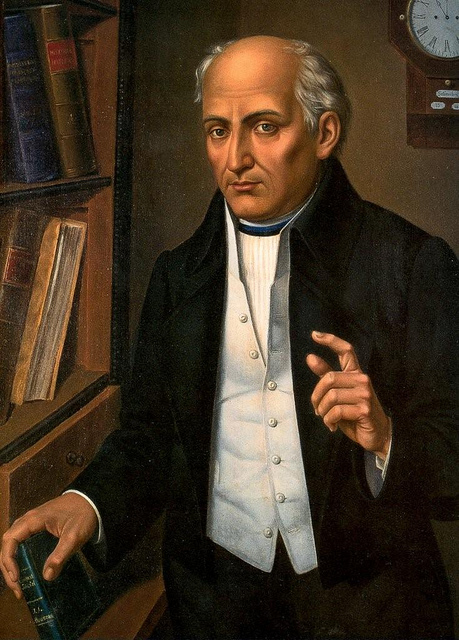
The way that the people of Mexico went about their revolution is very different than the revolutions that happened in Gran Columbia and Brazil. Something that the people chose to do differently was how they fought during the revolution. The Brazilian revolution was completely peaceful, but both the Gran Colombian and Mexican revolutions had violence involved. Another difference is all three revolutions were led by different people. The leader of the Mexican revolution was miguel Hidalgo y Costilla, the leader in of the Brazilian revolution was Pedro, and the leader of the revolution in Gran Columbia was Simon Bolivar. A similarity of these revolutions is that they were  all fought in order to receive independence. Also, all of these revolutions occurred in the same time period, in the early 1800s. Another similarity between these revolutions is that they were all fought for independence.
Even though these revolutions took different approaches, all three were similar because race was an issue. The leader of the Brazilian revolution, Pedro, used race against his people, only allowing Portuguese born people and Peninsulars into his cabinet. Because of this, his people begin to like him less. In the Gran Columbian revolution, the leader, Simon Bolivar, brought races together by having them all fight in the army. The goal of his revolution was to end the racial segregation that was created by the current Spanish caste system. Lastly, race played a large role in the Mexican revolution. The leader, Miguel Hidalgo y Costilla wanted restore racial equality by ending the Spanish rule over Mexico. All three leaders made race a large part of their revolutions and based their decisions on it, for equality or segregation.

Sometimes in today's world we forget what an immense role race once played on peoples everyday lives. In addition, we live in a place where racism is barely an issue, so we may not realize how some peoples lives are affected everyday by it. In the south, racism is still a work in progress, and unfortunately we are far from racial equality in all of America. Recently, race has been one of the biggest topics in the news, after the events that took place in Ferguson, Missouri. An unarmed black man was killed by a white cop, and the trial concluded that the cop was not guilty of murder. While this is an awful conclusion given the evidence, I believe that it shows how much we have improved as a nation. Not because of the decision, but how people reacted to it, maybe not in the most peaceful ways, but people expressed their dissatisfaction for this racial inequality, something that decades ago would never have happened. I still believe that we, as a country, need a lot of work until racial equality can be a reality. I think that it is important to look at the issue of race in our lives, because innocent people are still being affected by this, and it is not fair. If we ignore the issue, then it will not get any better and more innocent people will have to suffer. Although I believe that each day our country is getting closer to racial equality, and it is nowhere near as extreme and cruel as it used to be, it is still a topic that needs to be addressed and something that must be worked on.


                                                    Miguel Hidalgo y Costilla, Leader of the Mexican Revolution        http://upload.wikimedia.org/wikipedia/commons/b/bf/Miguel_Hidalgo_y_Costilla.png